.png)
Architectural Harmony: Why Acoustic Felt is the Ultimate Design Statement for the Pet Home
In the international design landscape of 2026, we are witnessing the death of "The Eyesore Pet Bed." Homeowners today curate their environments with surgical precision, and they demand that their pet's furniture meets the same standards as their own designer chairs and art pieces. We call this the Human-Feline Co-Living Trend.
The Acoustic Felt Cat Cave is uniquely positioned to dominate this market. Unlike traditional textiles or cold plastics, industrial-grade felt possesses a "soft-sculptural" quality. It absorbs light rather than reflecting it, providing a sophisticated matte finish that enhances—rather than distracts from—the surrounding decor.
1. Modern Minimalist: The Power of Clean Lines and Neutral Tones
For the urban professional in 2026, the "Modern Minimalist" or "Industrial Loft" style is a sanctuary of order. This style demands products that are functional, geometric, and understated.
Design Matching: For this environment, we recommend acoustic felt caves in Charcoal, Slate, or Ash Grey. The smooth, seamless curves of a capsule-shaped or geometric-pod design mirror the clean lines of modern cabinetry and metal accents.
The Aesthetic Reason: The non-reflective surface of the felt blends into the shadows of a minimalist room, making the sanctuary appear like an intentional architectural feature rather than an added accessory.
2. European Classical: Opulence Meets Functional Softness
The "European Classical" or "Grandmillennial" style is characterized by rich textures, intricate patterns, and deep color palettes. A standard pet bed often looks "cheap" in such a luxurious setting.
Design Matching: In these homes, the acoustic felt cave should lean into "Jewel Tones"—Emerald Green, Navy Blue, or Burgundy. We look for designs that feature laser-cut decorative apertures or gold-finished hardware.
The Aesthetic Reason: The density of high-quality felt mimics the weight and "hand" of heavy velvet or wool drapes. It provides a "textile luxury" that complements antique wood and ornate moldings, elevating the cat’s home to a boutique level.
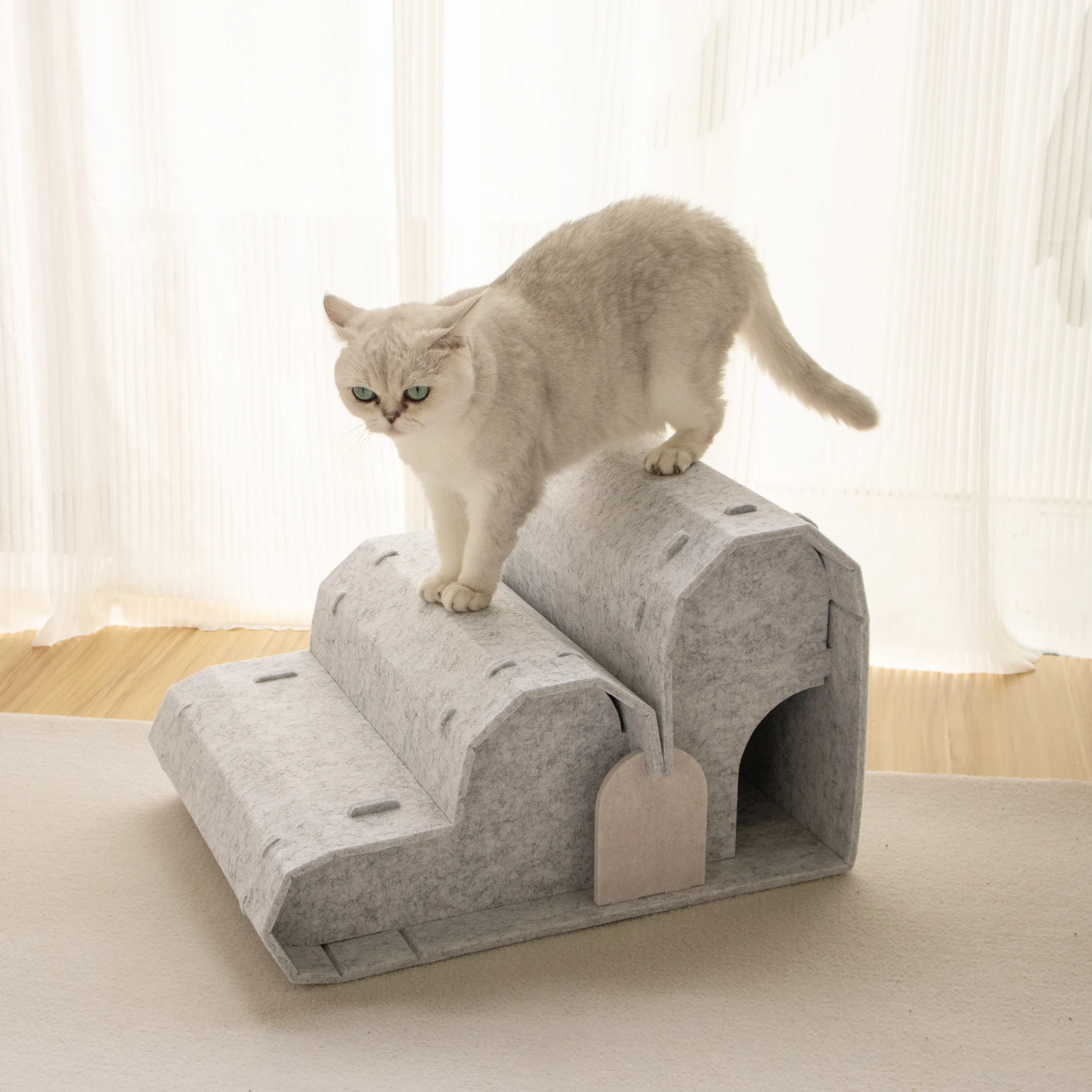
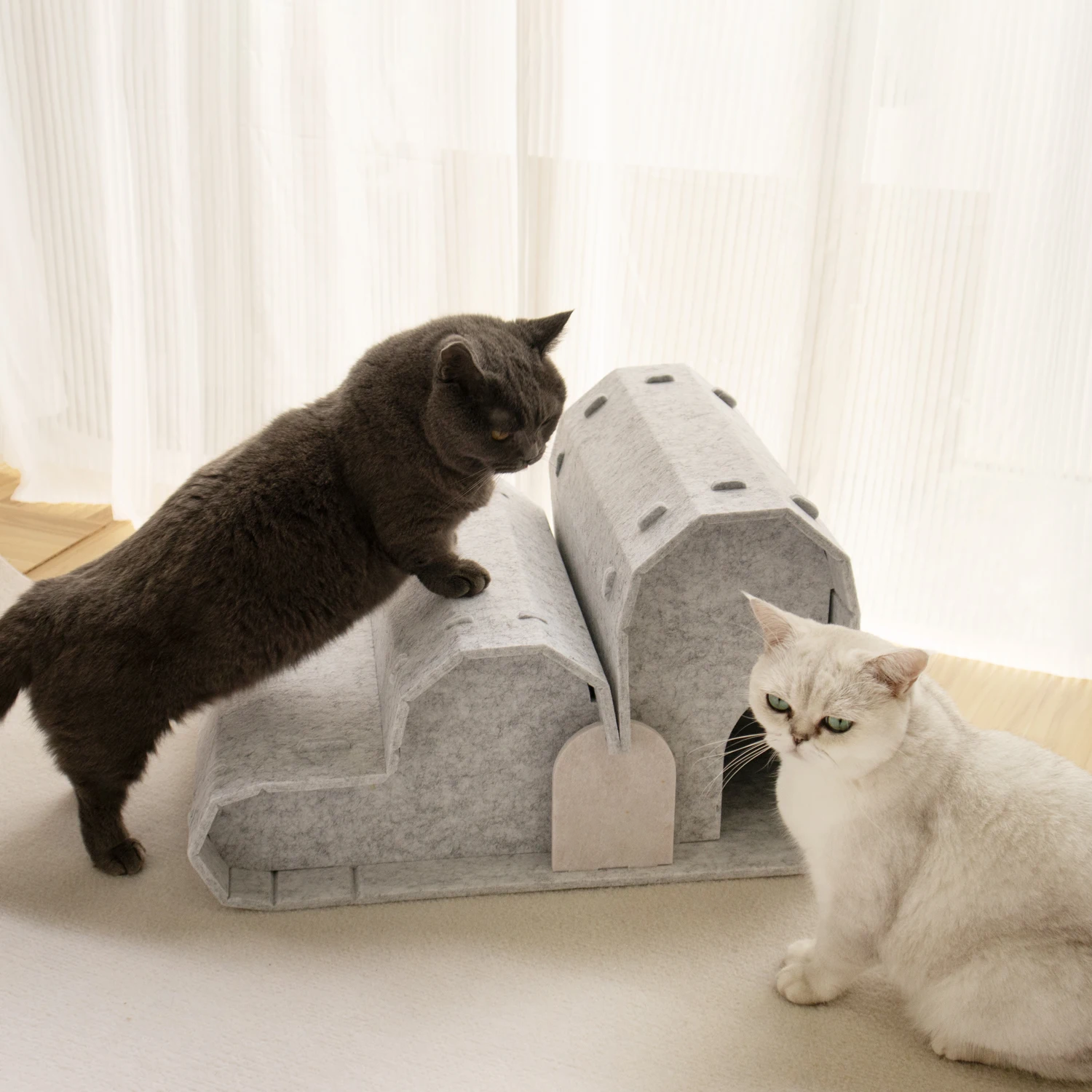
3. Japanese Zen and Japandi: The Beauty of Natural Simplicity
The "Japandi" (Japanese-Scandinavian) trend remains the most dominant global interior movement of 2026. It focuses on "Wabi-Sabi"—finding beauty in the natural, the simple, and the tactile.
Design Matching: For Zen-inspired homes, we recommend earthy, "undyed" tones such as Oatmeal, Sand, or Sage. Shapes should be organic and low-profile, mimicking the appearance of river stones or woven cocoons.
The Aesthetic Reason: Felt is a tactile medium. It resonates with the natural materials used in Zen design, such as light oak, bamboo, and linen. By choosing an organic-shaped felt sanctuary, the owner creates a biophilic connection that promotes peace for both the human and the cat.
4. B2B Commercial Insight: The Lifestyle Partnership Strategy
From a trade perspective, Article 7 is about Expanding the Sales Channel.
The Strategic Hook: In 2026, do not market this solely to pet stores. Market it to Interior Design Firms and Furniture Showrooms. Position the acoustic felt cave as a "Home Accessory" that solves the client’s problem of "Ugly Pet Gear." Offer these retailers "Style Reference Guides" that show how specific felt colors coordinate with the year's top paint and upholstery trends. By positioning your product as a design choice, you attract a premium demographic that views the purchase as a home improvement, allowing for significantly higher price points.
5. Conclusion: Designing a Harmonious Future
In conclusion, the Acoustic Felt Cat Cave is a masterpiece of "Diplomatic Design." It respects the biological need for a quiet sanctuary while honoring the human's desire for a beautiful home. 🚀🌟
We are building a world where pet furniture is no longer an "extra" item that we tolerate, but a "featured" item that we celebrate. When architecture and instinct meet in a single felt pod, true household harmony is achieved.
Is your brand ready to lead the pet-centric design movement? Let us discuss how our style-forward felt designs can anchor your 2026 boutique collection. 🚀📦
[Click Here to Request our Full Catalog & Material Safety Data Sheets]




Tel:+86 13426424820
Tel:+86 10 60211314